Solid waste incineration: from devil to hero?
Waste incinerators were once the subject of mass street protests in China. They are now celebrated as an environmental success story.
Saturday 2nd of August 2025
There are not enough garbages to be burned by the country’s fleet of Waste-to-Energy (WTE) incinerators, a viral video circulating on Chinese social media proudly declared recently. The high-temperature and high-tech furnaces are so powerful and efficient that they have more than resolved the urban waste challenge that once was a headache for governments worldwide. Now the furnaces struggle to find garbage to fill their bellies. Some of them even need older waste, excavated from landfills, to keep themselves running. “China has incinerated all its garbage, along with the Western myth that urban waste problems are unsolvable,” the video concluded.
Viewers responded to the triumphant video with a palpable sense of relief. Some interpreted its message as permission to dispose of waste freely, unburdened by the guilt typically associated with littering: “Why bother carefully sorting and reducing our waste when powerful new technologies can handle it all with ease?”
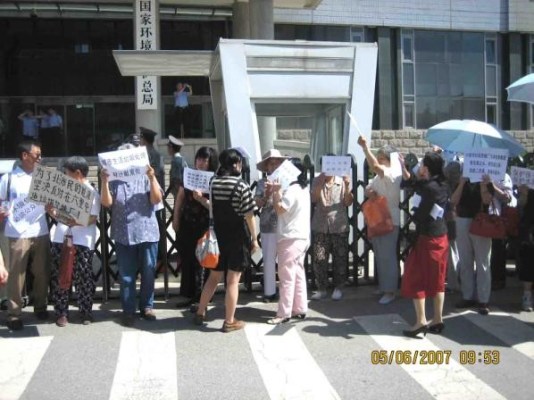
For those who have observed China’s environmental sector for some time, the public’s reaction to the video is a reminder of how prevailing narratives have shifted. Ten years ago, WTE incinerators were among the most controversial technologies opposed by the public. The construction of such facilities in cities, believed to be sources of toxic pollution, often met with intense street protests labeled as Not-In-My-Backyard (NIMBY) mobilizations. The most well-known protests took place in Beijing and Guangzhou (as documented in my book). These movements now seem like distant memories. When activists resisted Beijing’s Liulitun WTE project (2007) or Guangzhou’s Panyu project (2009), they were opposing a relatively new and controversial solution to the urban waste problem. At that time, China had only a few dozen such projects nationwide. Today, there are over 1,000 incinerators capable of turning 388 million tons of urban waste to ash every year. This capacity already exceeds the total amount of waste generated by Chinese cities in 2023 (322 million tons). The claim that there is not enough garbage to be burned is, therefore, not incorrect.
However, as critics of the video quickly pointed out, the gap between incineration capacity and total waste generation should not be celebrated as the successful resolution of the waste problem—especially since waste generation is still on the rise. Instead, it signals overcapacity on the incineration side of the equation. In other words, China has too many incinerators, not too little waste.
The extraordinarily rapid rise of incineration as China’s primary solution to the urban waste challenge marks a remarkable turn in global environmental history, due to the sheer scale of this transformation. In 2015, incineration managed only 65 million tons of garbage—about 25% of the urban total. Within just ten years, it is capable of handling 120% of the total, even as waste generation continues to grow. This represents a large-scale reconfiguration of Chinese cities’ metabolism, as unprecedented volumes of waste are diverted from landfills to high-temperature furnaces. For context, Japan’s entire incinerator fleet processes 40 million tons of municipal waste annually, while Germany’s handles 26 million tons. Such a dramatic shift has significant implications for emissions of all kinds—from greenhouse gases and leachates to atmospheric heavy metals and persistent organic pollutants (POPs), particularly carcinogenic dioxins.
Some of these shifts can be seen as positive: for example, landfills are a major source of methane, a potent greenhouse gas. Reducing reliance on landfilling should, in theory, help avoid methane emissions, even though burning waste still emits carbon dioxide. In fact, one estimate puts the total CO₂ emissions from Chinese WTE plants at 100 million tons in 2022, accounting for 2.17% of China’s power sector emissions while contributing just 1.38% of the nation’s electricity. As these facilities increasingly burn fossil fuel-based solid wastes such as plastics, rather than primarily biomass (which is considered carbon neutral since it stores carbon during its formation), the carbon intensity of incineration, by some estimates, is actually higher than that of coal-fired power plants. This is a significant finding for China’s climate policymakers, who have so far encouraged WTE as a green source of energy.
Dioxin emissions remain a concern for the sector, which now accounts for more than one-quarter of the global total due to the sheer size of China’s incinerator fleet. Yet, in this area, significant progress must be acknowledged: since 2004, while the volume of waste processed by WTE facilities in China has increased 27-fold, the sector’s total dioxin load has reportedly shrunk by as much as eight times, according to one study. This level of pollution reduction is likely the combined result of public pressure—since dioxins have been the primary cause of public resistance to incinerators—and regulatory requirements enacted in response to these concerns. China’s emissions standards for incinerator dioxins are now ten times stricter than those of the EU, and WTE facilities are required to report and disclose real-time furnace temperatures, a key indicator of dioxin formation. The same cannot be said for other toxic pollutants, however; mercury emissions from WTE facilities, another pollutant of global concern, are expected to rise in the foreseeable future, due to the mercury content in waste and the coal used to assist the incineration process.
All things considered, China’s decisive pivot to incineration as the No.1 solution to its urban waste challenge may appear to be a positive development, especially when compared to the main alternative, landfilling, which generates significantly more greenhouse gases, requires much more land, and creates highly toxic leachates. Taking into account the sector’s greatly improved dioxin emissions—and temporarily setting aside mercury and other particulate emissions as niche concerns—one could reasonably conclude that the mass movement to stop WTE construction a decade ago was an overreaction in the context of recent environmental history.
While it is easy to appreciate the immediate appeal of WTE at this moment in history, it is important to recognize that many of the purported environmental benefits of these modern incinerators are hypothetical rather than absolute. When analysts highlight the carbon reduction achievements of incinerators, they typically present them as “avoided” emissions from landfilling, even though in practice, these waste burners release carbon into the atmosphere more intensively than coal-fired power plants. This results in a somewhat paradoxical situation where WTEs generate more “carbon savings” as China produces more urban waste. What such analyses often overlook is the real carbon-saving potential that could be achieved by reducing overall waste generation in Chinese society. Ironically, this scenario becomes less attainable as a direct consequence of the massive expansion of incinerator facilities.
As early as 2005, when China was on the brink of its “incineration revolution,” the World Bank warned that over-reliance on the technology could serve as a disincentive to reduce waste at the source. Two decades later, the viral video appears to validate that early warning: viewers now dismiss calls to reduce, reuse, and recycle as unnecessary, believing a technological panacea is at hand. This triumphant message even renders President Xi’s high-profile waste sorting initiative awkwardly out of tune, despite the fact that properly sorted waste is actually essential for cleaner and more efficient incineration—and is one reason WTE facilities struggle to find enough burnable material, as more waste is diverted to composting and recycling in cities like Shanghai. Ultimately, the insatiable appetite of the WTE fleet locks China into a “second best” solution to its urban waste problem, keeping the genuinely circular economy out of reach.
Society is, in effect, compelled to accept this solution through a wide range of incentive schemes—including tax rebates, land use permits, and subsidies—that promote WTE adoption (as documented in my book). Another factor that often goes underappreciated yet plays a significant role in the widespread rollout of this technology in China is cost reduction. Much like renewables and electric vehicles, the WTE sector has achieved impressive technological advancements and localization, making incinerators far more appealing to local governments. Of course, the silencing of the anti-incineration social movement in China (as described in my book) also played a crucial role. From today’s perspective, with incineration at maximum capacity, that movement may appear to have been a lost cause or a distraction. However, it is important to emphasize that without the intense and sustained public pressure of the early 2010s, China’s WTE facilities would not have managed their toxic footprint nearly as effectively. Had dioxin emissions remained at their 2004 levels across the newly constructed incinerators while waste generation multiplied 27-fold, WTE would not be the “second best” option we discuss today—it would have been a nightmare scenario for China and the world.
Now that we are already living with the “second best” option, the logical question is whether we should embrace it for the time being or continue striving toward an even better future for managing product life cycles. In this regard, we need look no further than Hong Kong, whose government has just announced that the city can avoid building a third WTE facility and still achieve its zero-landfilling target by 2035 if the current trajectory of waste reduction is maintained. Anyone who has visited the South China metropolis knows that Hong Kong is hardly an example of exemplary waste management. There are no fancy waste separation bins on the streets, and the city’s extravagant consumerism is well known. Yet, with common-sense measures such as a single-use plastic ban, the city is gradually shrinking its waste footprint. Moreover, unlike many cities in mainland China, Hong Kong does not have the developmental urge to build WTE facilities for the sake of building them. So, will it serve as an inspiration for the rest of the country, which is currently reveling in the WTE success story?
Green Citizens Political Economy

Leave a Reply