The women in China’s environmental history
China just lost one of the leading figures of environmental science. She reminds us of women's role in greening the country.
Sunday 6th of July 2025
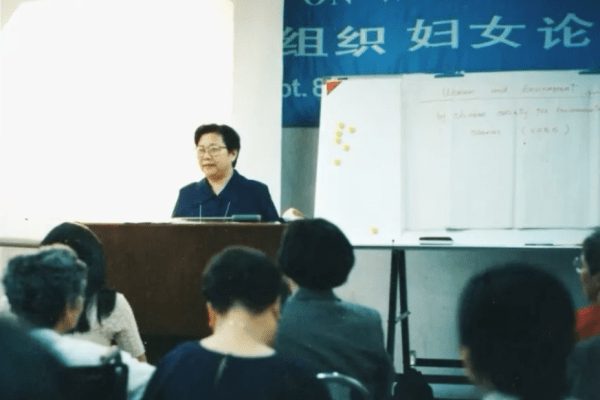
On June 11th, Professor Tang Xiaoyan of Peking University passed away at the age of 93. In the days following her passing, environmental scientists, advocates, and policymakers around the world honored her extraordinary career as one of China’s foremost atmospheric chemists and a pioneer in the nation’s atmospheric pollution research. Below, I have included a commemorative statement from the United Nations Environment Programme highlighting her significant contributions to global efforts in controlling ozone-depleting substances.
Amid the outpouring of tributes, Professor Tang’s students, colleagues, and research collaborators recounted numerous anecdotes from her life, many of which were previously unknown to me. These stories reveal the depth of her character as both a scientist and an educator. Remarkably, she continued to teach the undergraduate course “Environmental Issues 101” well into her eighties—a rare commitment for someone of her senior status, having been inducted as an Academician of the Chinese Academy of Sciences in 1995.
Wei Ke, a young atmospheric physicist, reflected on a collaborative research project he conducted with Professor Tang in 2018, which likely resulted in one of her final published papers. In this project, two scientists from different generations worked side by side to address the widespread misuse of the term “haze” in discussions of air pollution caused by fine particulate matter. Professor Tang was renowned for her rigor and insistence on precision, and even in the later stages of her career, she remained intolerant of imprecise terminology.
In my book, I highlighted Professor Tang’s leadership of the task force responsible for managing Beijing’s air quality during the 2008 Olympic Games. Many consider China’s campaign to address air pollution as the true beginning of the nation’s remarkable green transition. If this is the case, then Professor Tang should be remembered as one of the architects of that transformation. It was she who initiated China’s research into the “smog” phenomenon as early as 1972, during the height of the Cultural Revolution.
Nowadays, the so-called “manels” (panels filled with men) are still a very common scene in Chinese environmental and energy policy discussions, even though female experts like Tang are as qualified to speak as their male colleagues. The recent Chinese environmental history is filled with women trailblazers. They are the main characters of Chinese environmental civil society since the 1990s (Leaders such as Wang Yongchen and Jin Jiaman are still active today). Besides Tang Xiaoyan, other female scientists such as Prof. Lu Zhi have played path-breaking roles in the country’s environmental journey. And even Xie Zhenhua, China’s environmental and climate czar for almost three decades, had a lesser known deputy Wang Jirong, whose interventions on the Huai River pollution and on the Nu River dam project should not be forgotten.
Today, “manels”—panels comprised exclusively of men—remain a common sight in discussions on environmental and energy policy in China, despite the fact that female experts like Professor Tang are equally qualified to contribute. Contemporary Chinese environmental history is marked by the achievements of numerous pioneering women, many of whom have been at the forefront of environmental civil society since the 1990s. Leaders such as Wang Yongchen and Jin Jiaman continue to play influential roles today. In addition to Professor Tang Xiaoyan, other female scientists like Professor Lu Zhi, also at Peking University, have made groundbreaking contributions to the nation’s environmental progress. It is also worth noting that Wang Jirong, the lesser-known deputy to Xie Zhenhua—China’s leading environmental and climate official for nearly three decades—played a critical role; her interventions in the management of pollution in the Huai River and the Nu River dam project remain significant milestones that should not be forgotten.
——–
In memory of Professor Xiaoyan Tang (1932-2025)
Ozone Secretariat, United Nations Environment Programme
The Ozone Secretariat is deeply saddened to hear of the passing of Professor Xiaoyan Tang on 11 June 2025. She was a long serving co-chair of the Environmental Effects Assessment Panel (EEAP) from 1993 until 2012. During her tenure, she oversaw five quadrennial assessment reports, starting with the first in 1994, as well as numerous progress reports and the launch of the first ‘Frequently asked questions’ in 2010. Over the years she has made tremendous contributions to the protection of the ozone layer; not only to the Montreal Protocol but also to China’s efforts at the national level.
A graduate from Peking University in 1954, she was one of the earliest scholars in China to engage in environmental science education and research going on to become a world-renowned atmospheric environmental chemist.
As early as 1991, Professor Tang led the drafting of China’s country program for the implementation of the Montreal Protocol. She and her colleagues also contributed to many other ozone layer-related scientific fields. In recognition of her services to ozone layer protection, she received the Vienna Convention 20th Anniversary Commemorative Award in 2005.
Among her many accomplishments, Professor Tang was also a highly respected teacher and outstanding educator who taught for over 70 years in the fields of environmental science and atmospheric chemistry.
Her passing is a great loss to the ozone community. She will be missed very much by the Montreal Protocol family and her many colleagues in the wider field of atmospheric and environmental sciences.
Green Citizens Public Participation

Leave a Reply